
Designing an Occupant-First In-Cabin Audio Experience for Immersive Mobility
A premium HMI concept turning buried audio settings into seat-aware, branded cabin controls.
AKG In-Cabin Studio reimagines vehicle audio as a first-class cabin experience rather than a deep settings chore. I designed an occupant-first interface that makes profiles, sound zones, immersion, and presets easy to understand, faster to reach, and more aligned with AKG’s premium brand language. The recommendation is consistent with the current IA, interface screens, and rationale boards shown on the live page
Situation
HARMAN needed an AKG-branded in-vehicle audio experience that felt premium without adding complexity.
TASK
Design a premium automotive interface that organizes core audio controls across daily driving and deeper spatial customization.
ACTION
I built a scalable IA, translated AKG’s studio-inspired brand language into HMI patterns, and centered interaction around occupants and seat-aware sound zones.
RESULT
The concept turns audio from a buried settings feature into a branded cabin experience designed for everyday use.
MOODBOARD
Moodboard Combining AKG Branding, Studio References, Product Materials, & In-Cabin Visual Inspiration.
Brand & Environment References Used to Translate AKG into a Mobility UI Language.
INFORMATION ARCHITECTURE
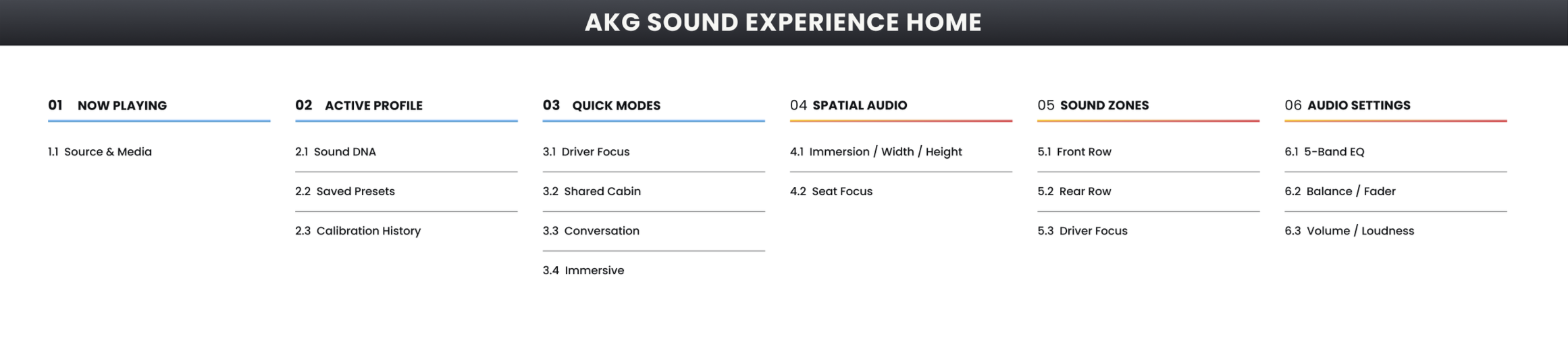
Information Architecture for AKG In-Cabin Studio Showing Six Top-Level Areas:
• Now Playing • Active Profile • Quick Modes • Spatial Audio • Sound Zones • Audio Settings •
The goal was to keep premium audio controls close to the driving experience instead of hiding them inside deep settings paths. This created a shallow, scalable hierarchy where occupants can quickly move between everyday listening, personalized presets, spatial tuning, and seat-based sound control.
SITE MAP
A shallow, scalable structure organized around listening moments, profiles, zones, & presets.
The site map organizes the experience into simple numbered sections, keeping the system easy to scan and easy to extend.
Core audio features are grouped by user intent: play media, personalize sound, switch cabin modes, tune spatial audio, control seat zones, or adjust technical settings. This keeps the interface premium without making it precious — no maze, no nonsense.
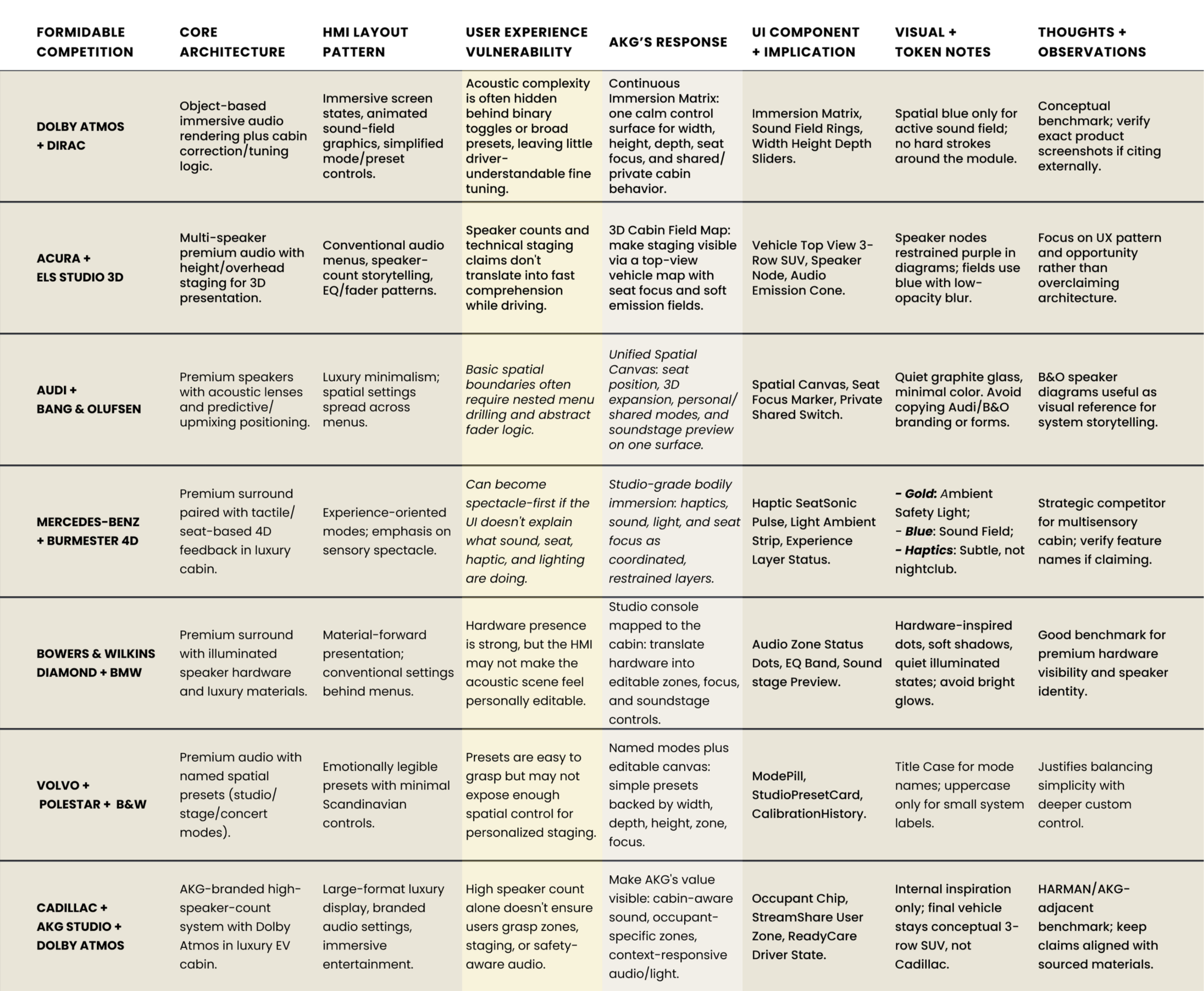
3D SPATIAL AUDIO COMPETITIVE BENCHMARK
Seven premium systems ➔ HMI vulnerabilities & THE AKG response
HARMAN ecosystem Logic
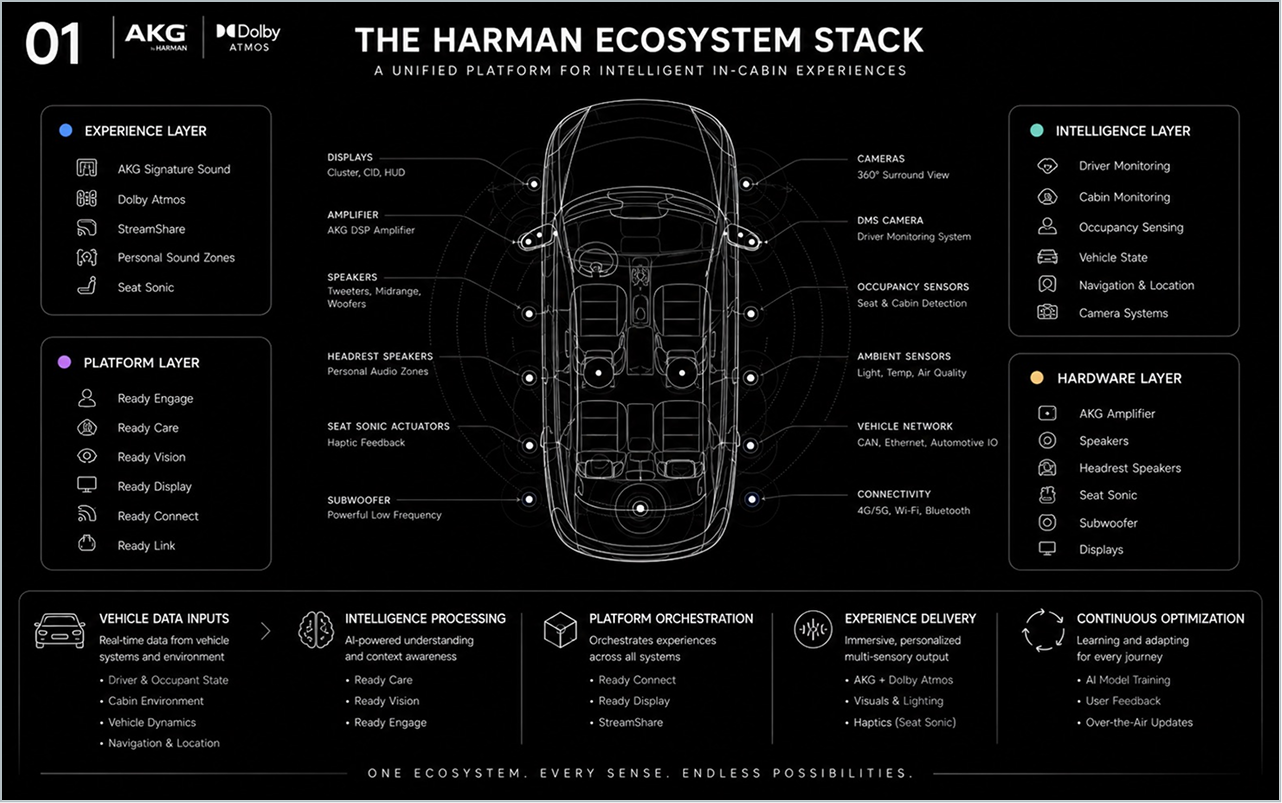
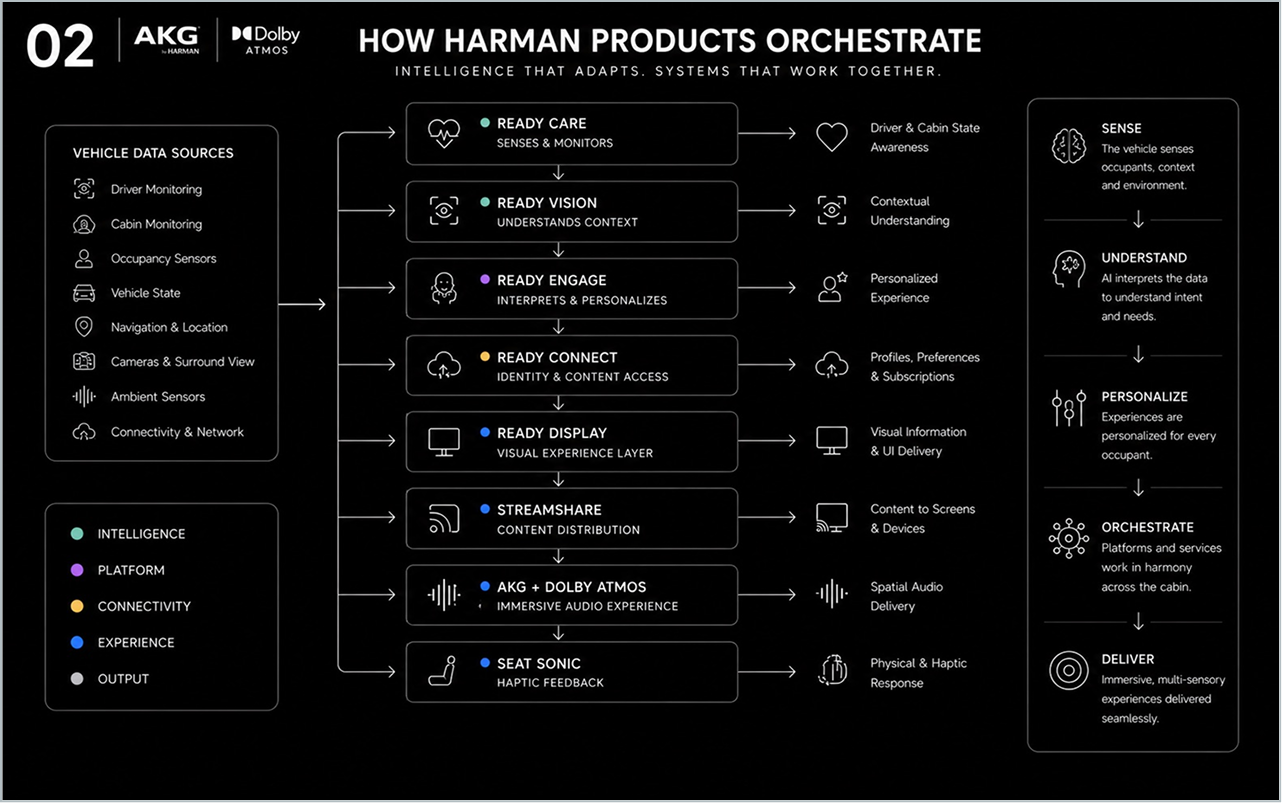
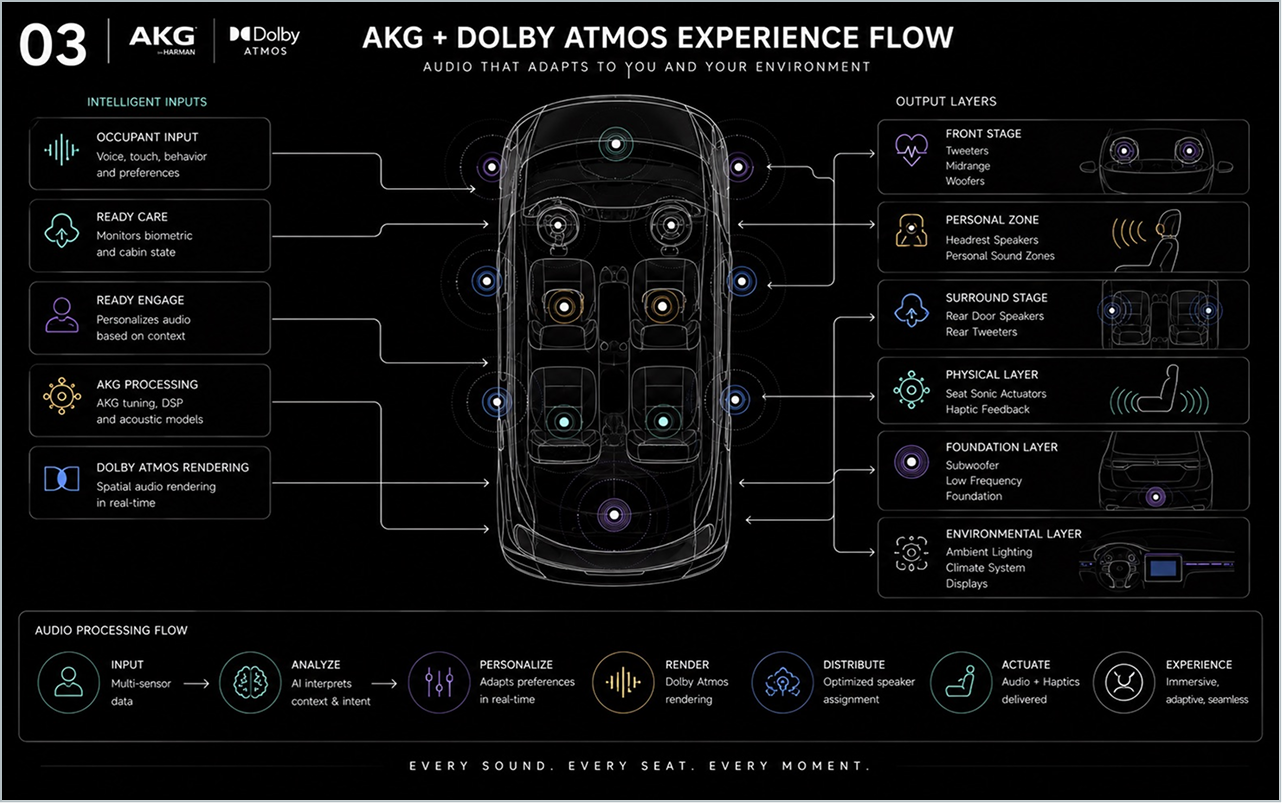
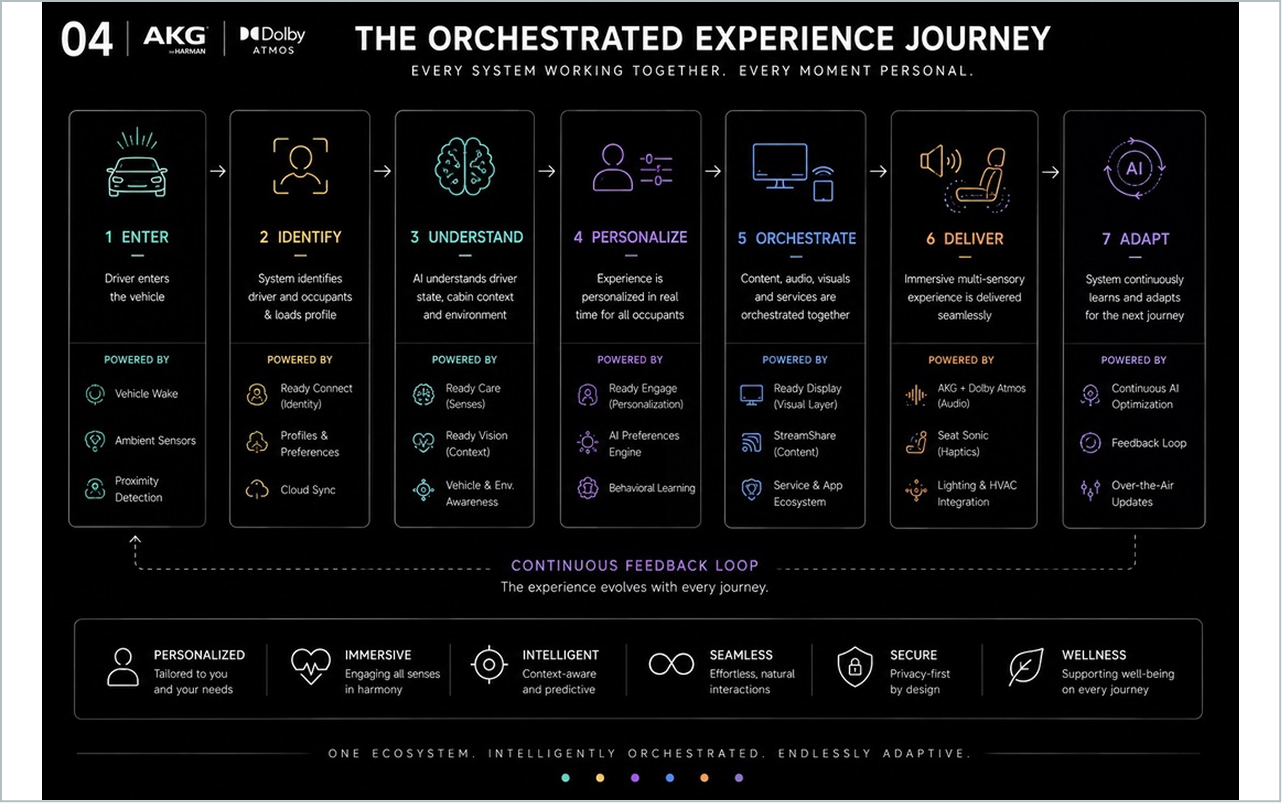
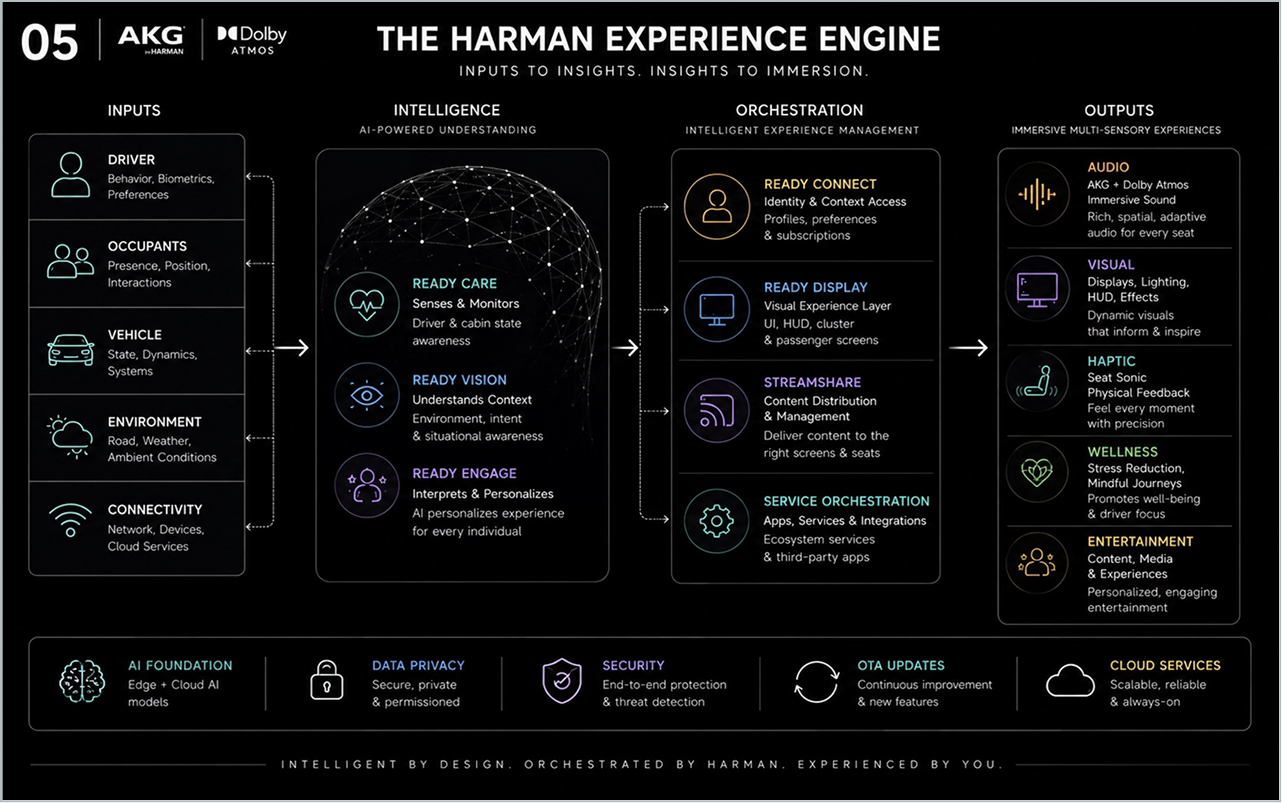
This concept treats AKG as the emotional and acoustic expression layer of a broader HARMAN mobility stack. Vehicle & Cabin Signals feed a Driver-and-Occupant State layer, which informs awareness, connectivity, content, display behavior, and ultimately an immersive audio rendering.
The display is not the product by itself; it is one of several synchronized surfaces through which the cabin experience is delivered. This framing aligns with HARMAN’s public “Ready” modules, which span situational awareness, display, vision, connectivity, and marketplace services. I developed these with the help of agentic research and instruction as an aid to fully grasp designing around an immersive environment, not just a screen.
SCREEN № 1
Home Landing Display
HOME LANDING WIREFRAME
Balancing daily utility with premium sound access.
The home wireframe tested how media, navigation, cabin controls, personalization, and AKG sound features could coexist on a single in-vehicle surface.
The layout prioritizes quick glances and fast interaction, while using cards to expose premium audio moments without overwhelming the driver.
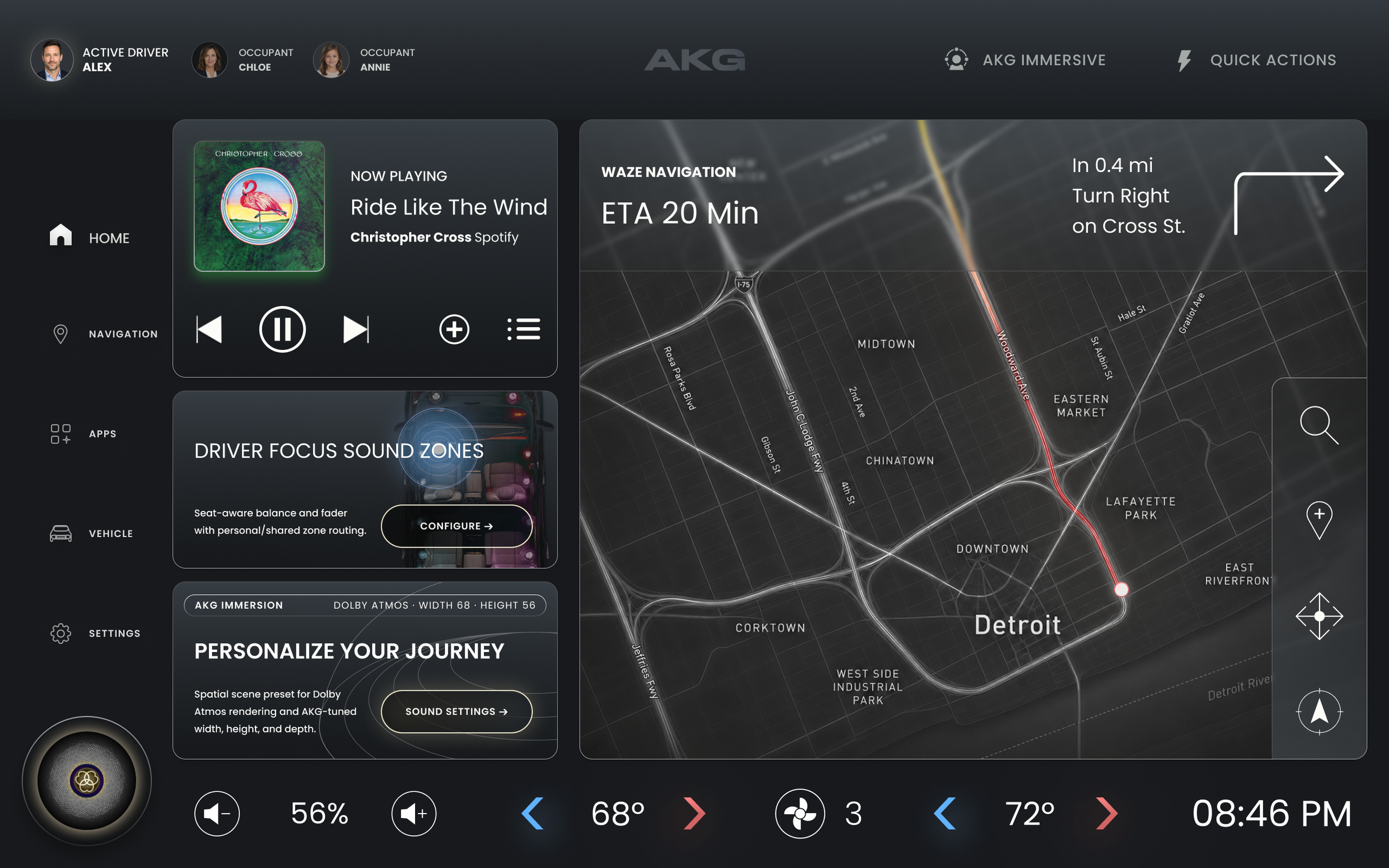
FINAL HOME LANDING DISPLAY
A premium audio layer for the everyday drive.
The final home screen brings together media, navigation, cabin controls, sound zones, and personalization into a single cohesive interface.
AKG features are presented as part of the daily drive, not as a separate novelty mode. The result is an experience that feels practical, branded, and premium without becoming a cockpit Christmas tree.
SCREEN № 2
IMMERSIVE AUDIO SETTINGS
IMMERSIVE AUDIO SETTINGS WIREFRAME
Low-fidelity immersive audio wireframe showing seat-aware sound controls, spatial tuning, and occupant-focused audio zones.
Wireframe exploration for making immersive audio feel tactile, seat-aware, and easy to adjust in the cabin.
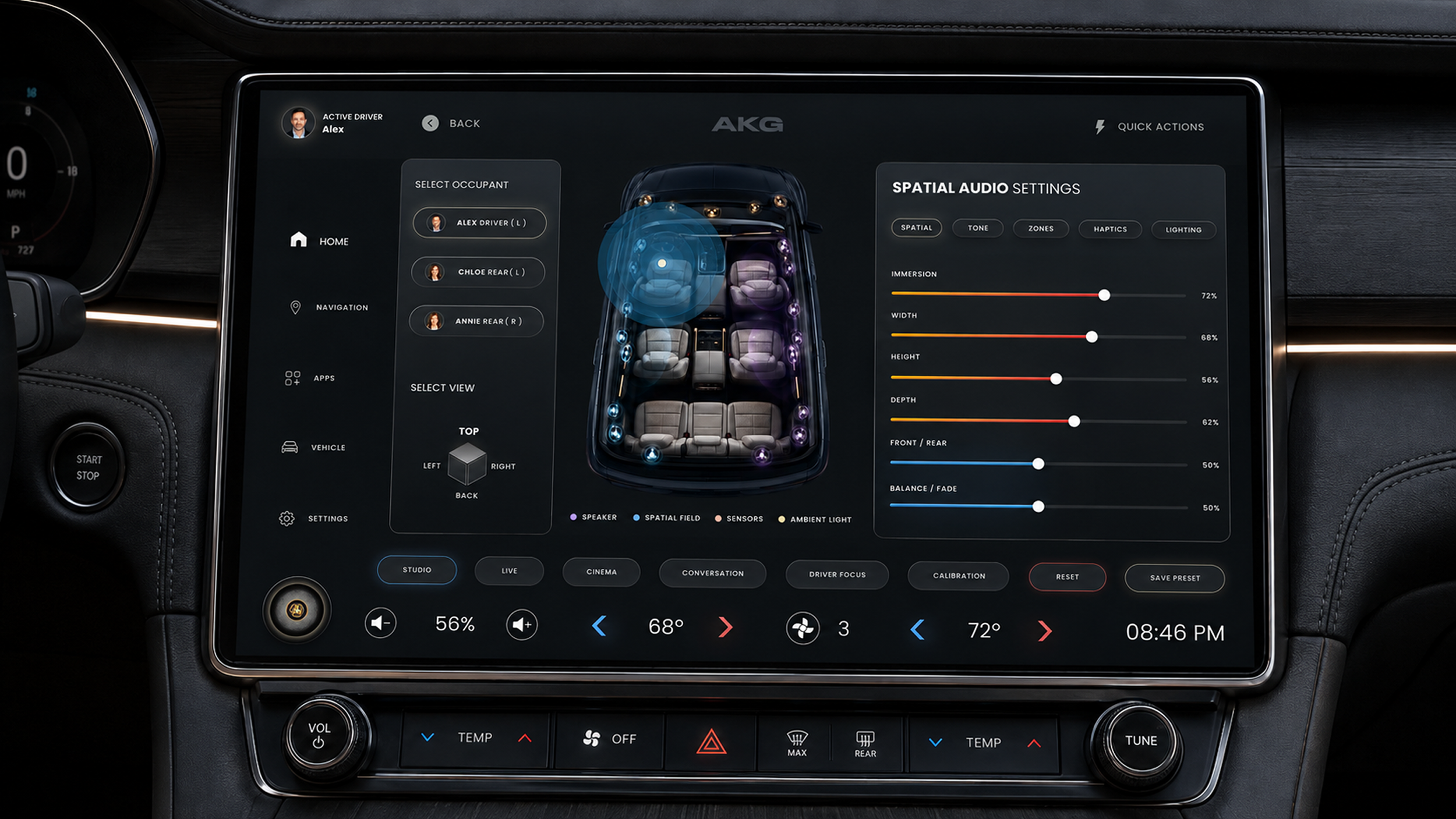
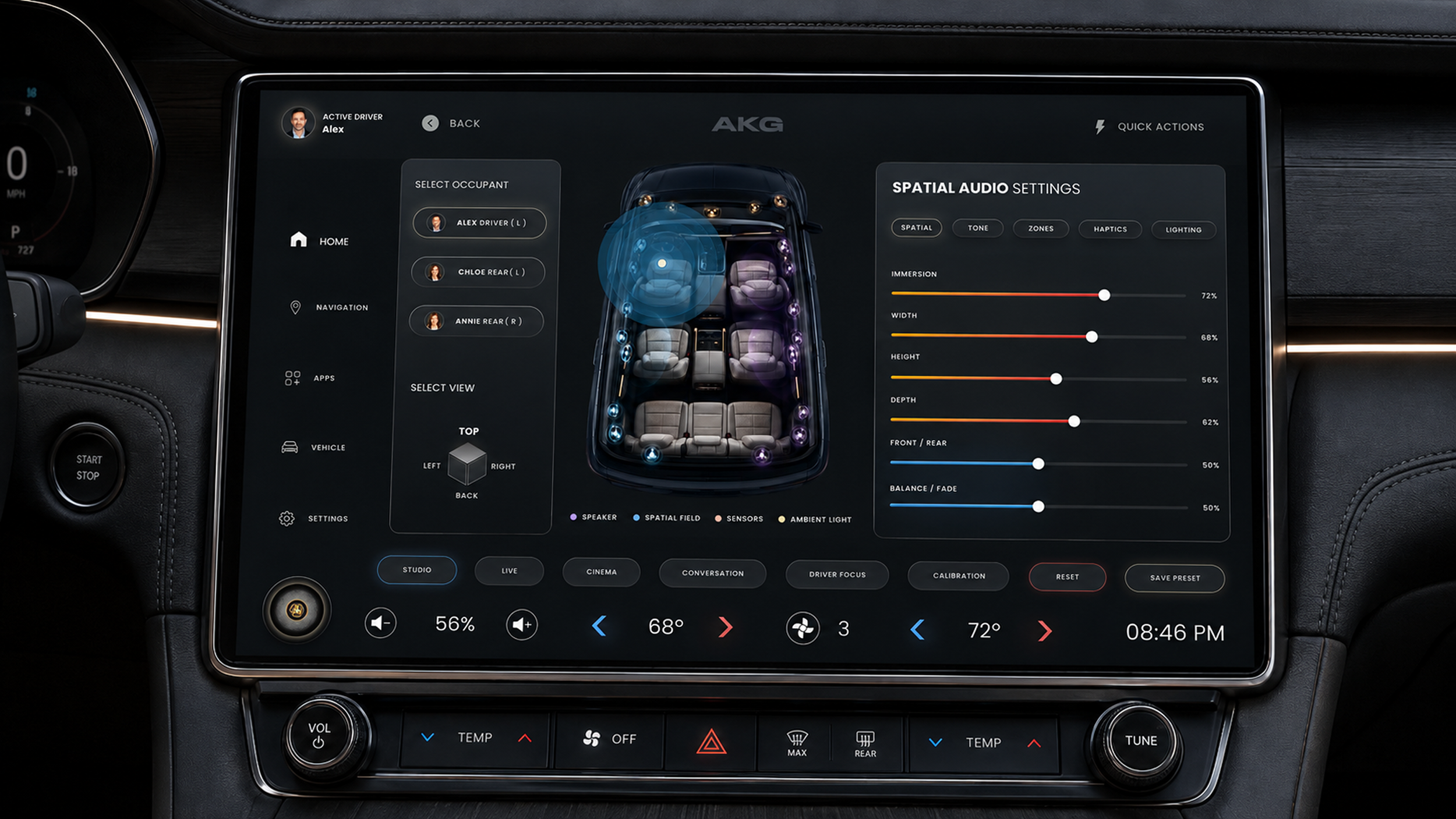
IMMERSIVE AUDIO SETTINGS DISPLAY
Occupant-first spatial control.
The spatial audio screen uses a top-down cabin model to make audio tuning more intuitive.
Users can adjust immersion, width, height, and seat focus through a visual relationship to the cabin. This shifts the interaction from technical adjustment to experiential control: who is listening, where the sound is focused, and how expansive it should feel.
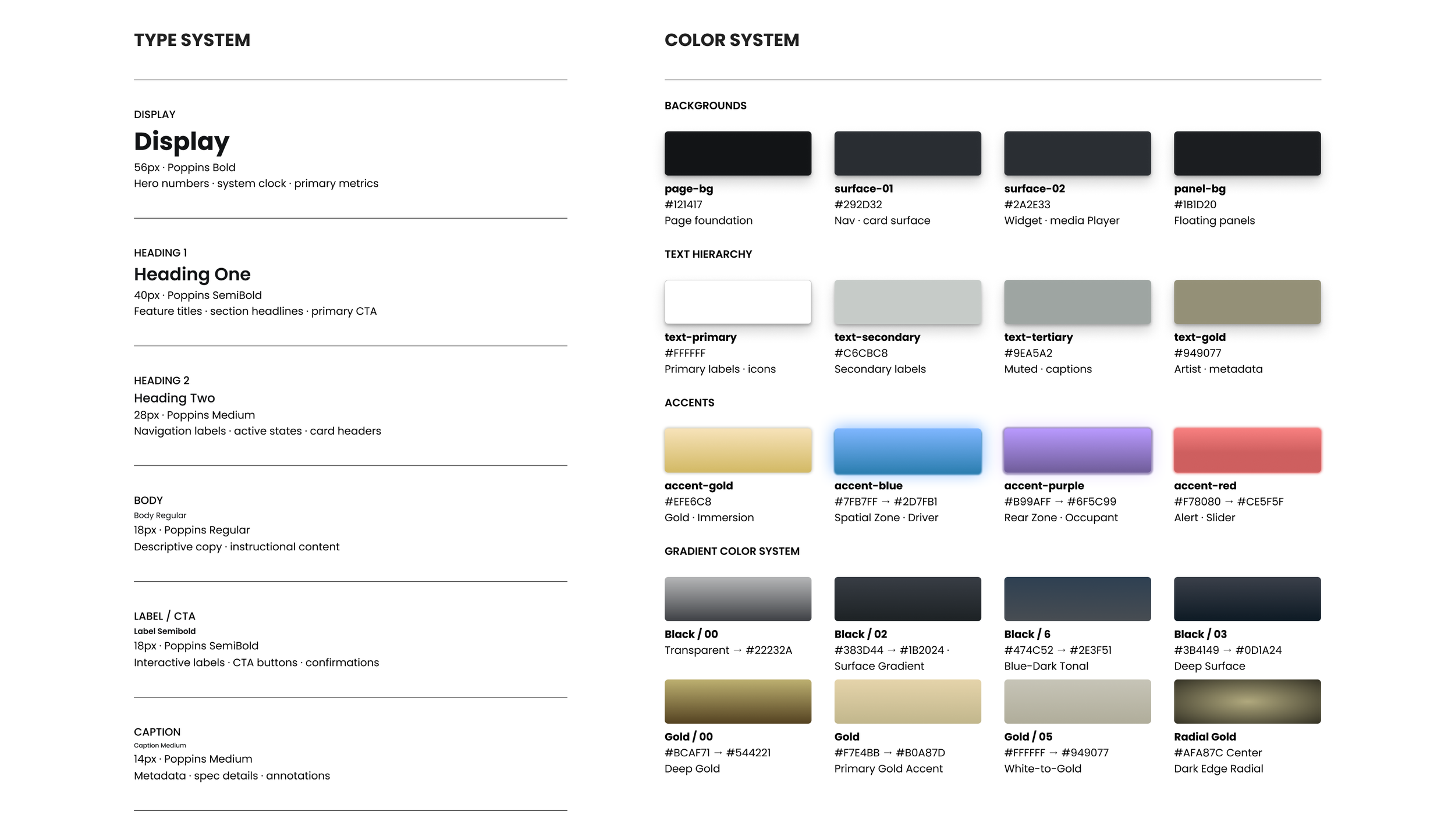
UI KIT
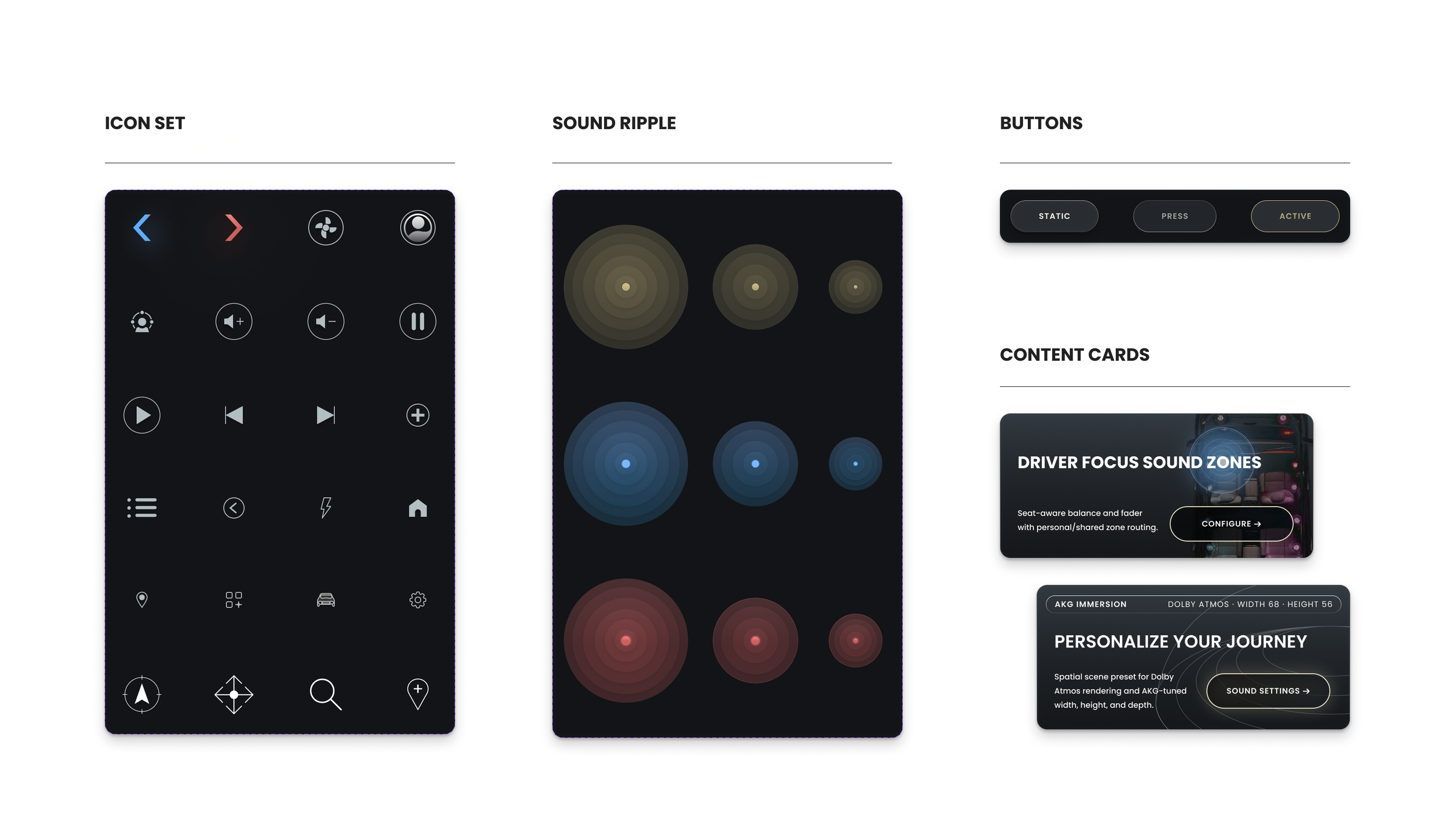
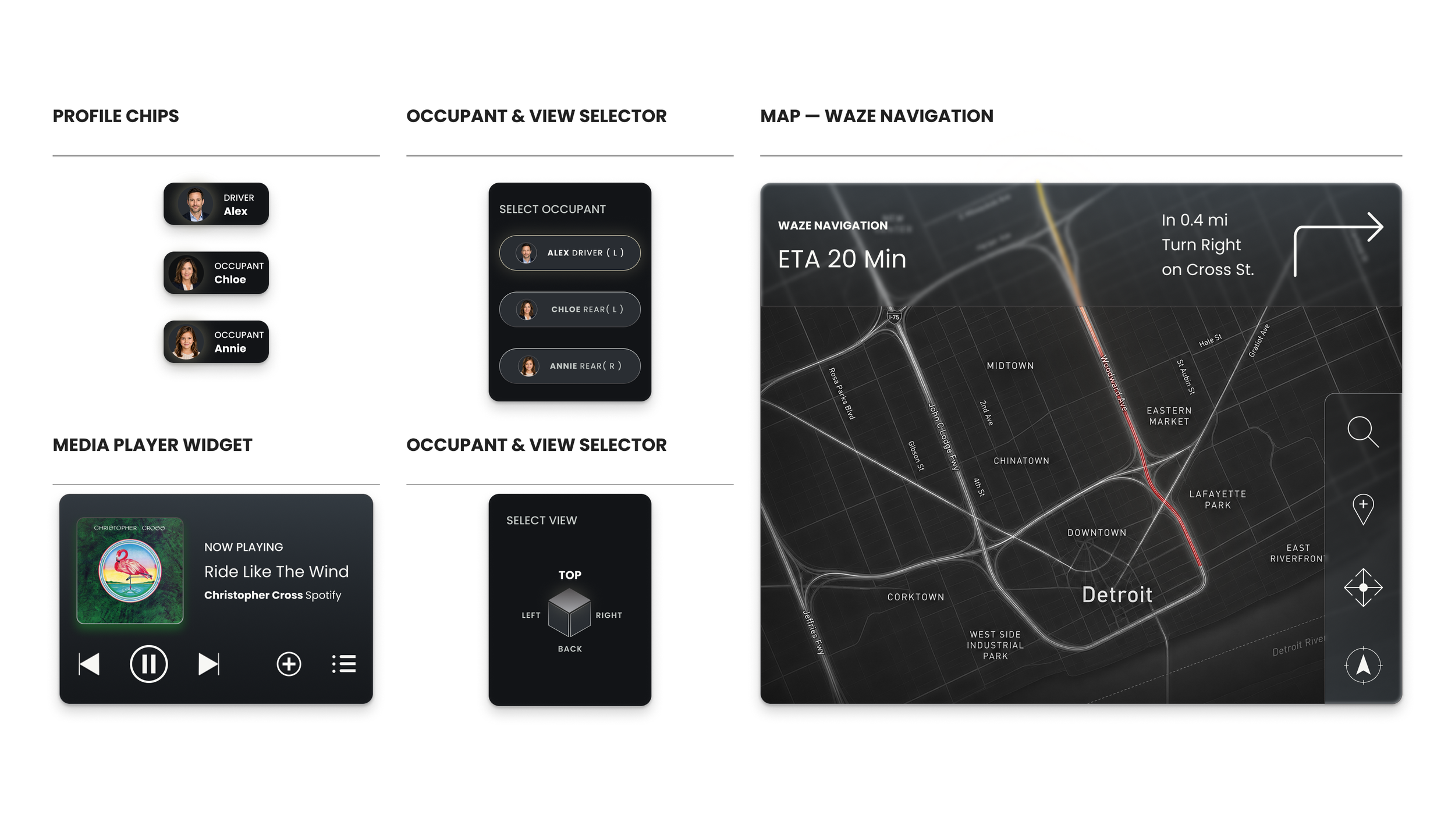
Scalable design system for a premium in-cabin audio interface.
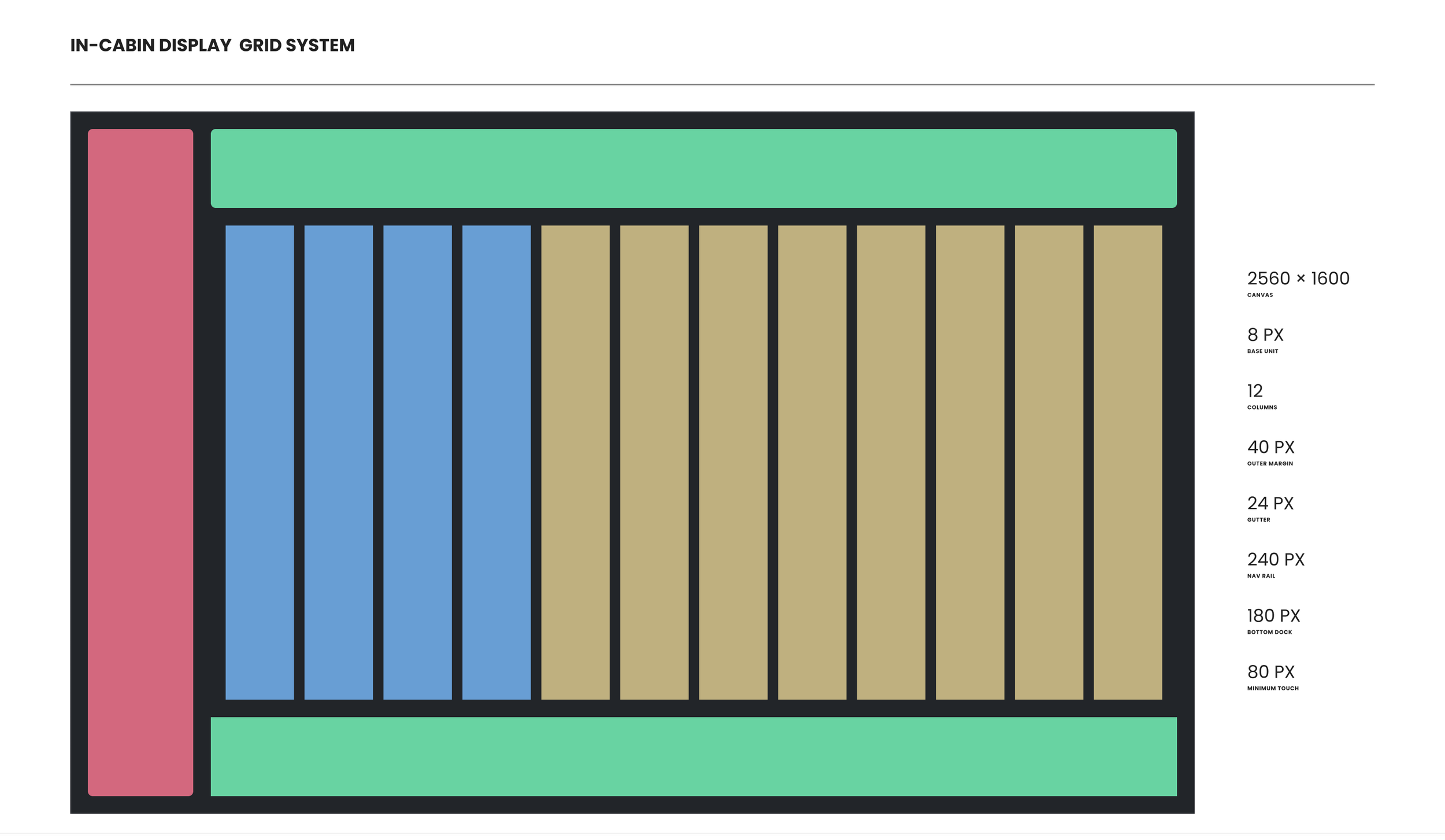
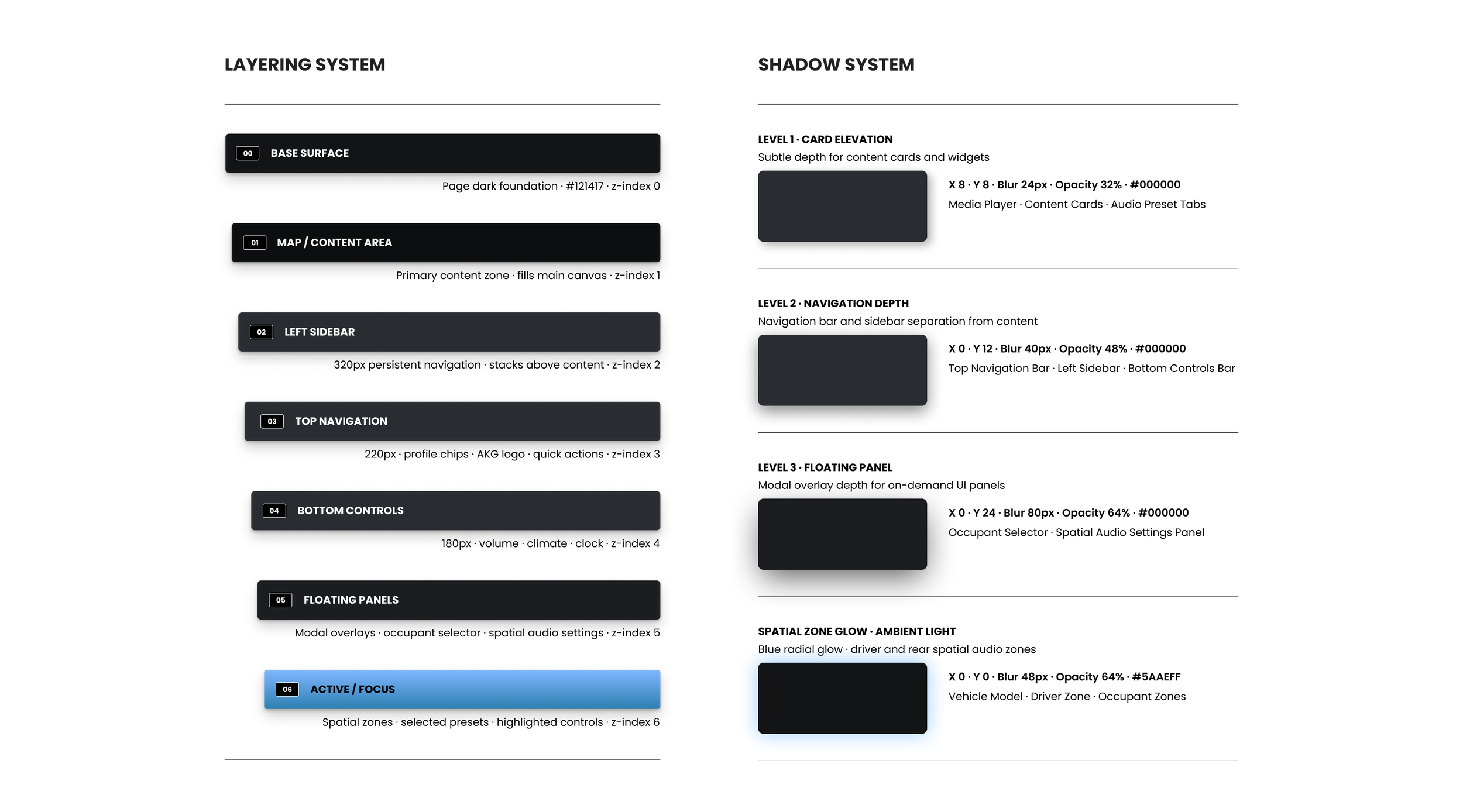
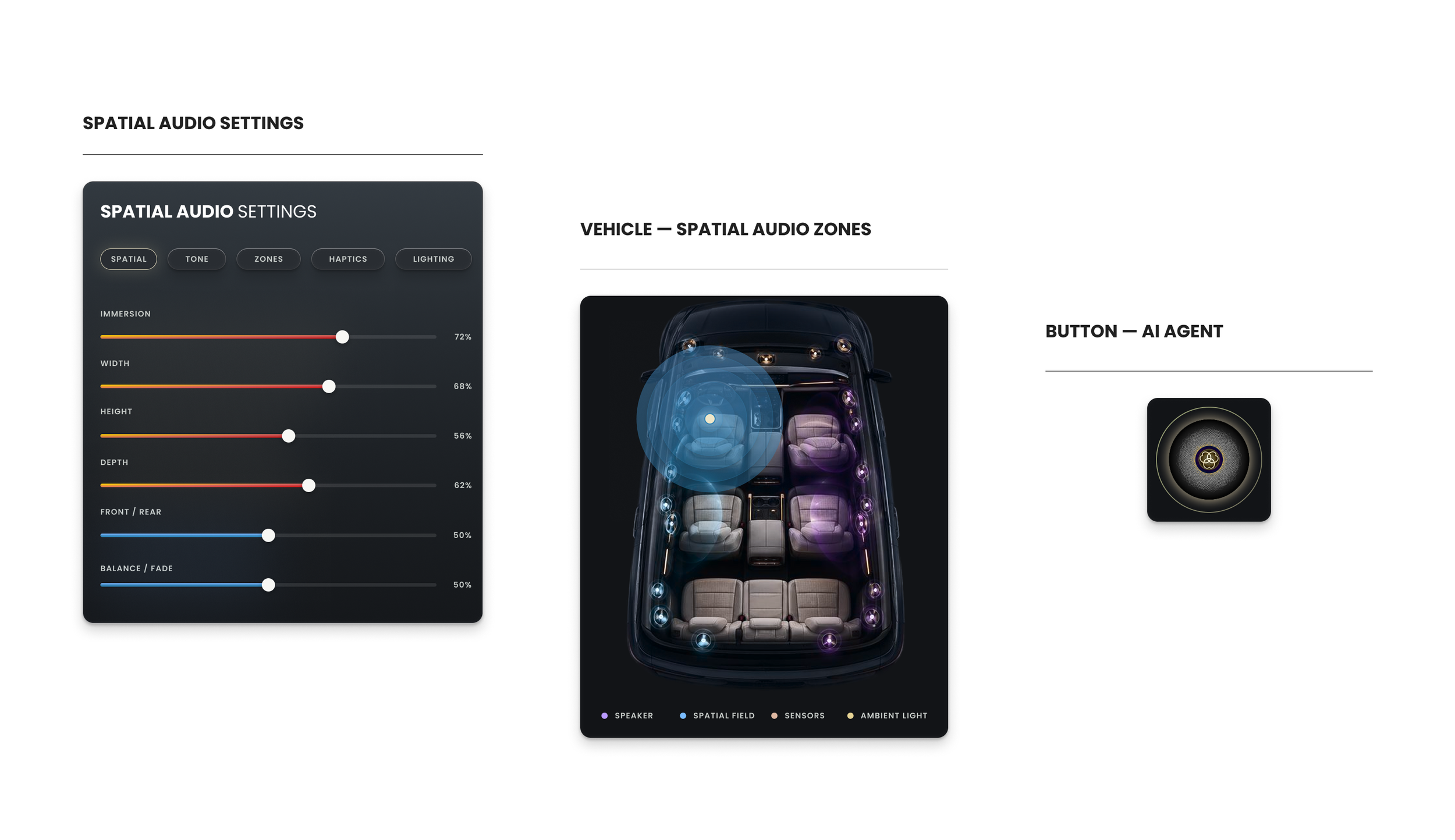
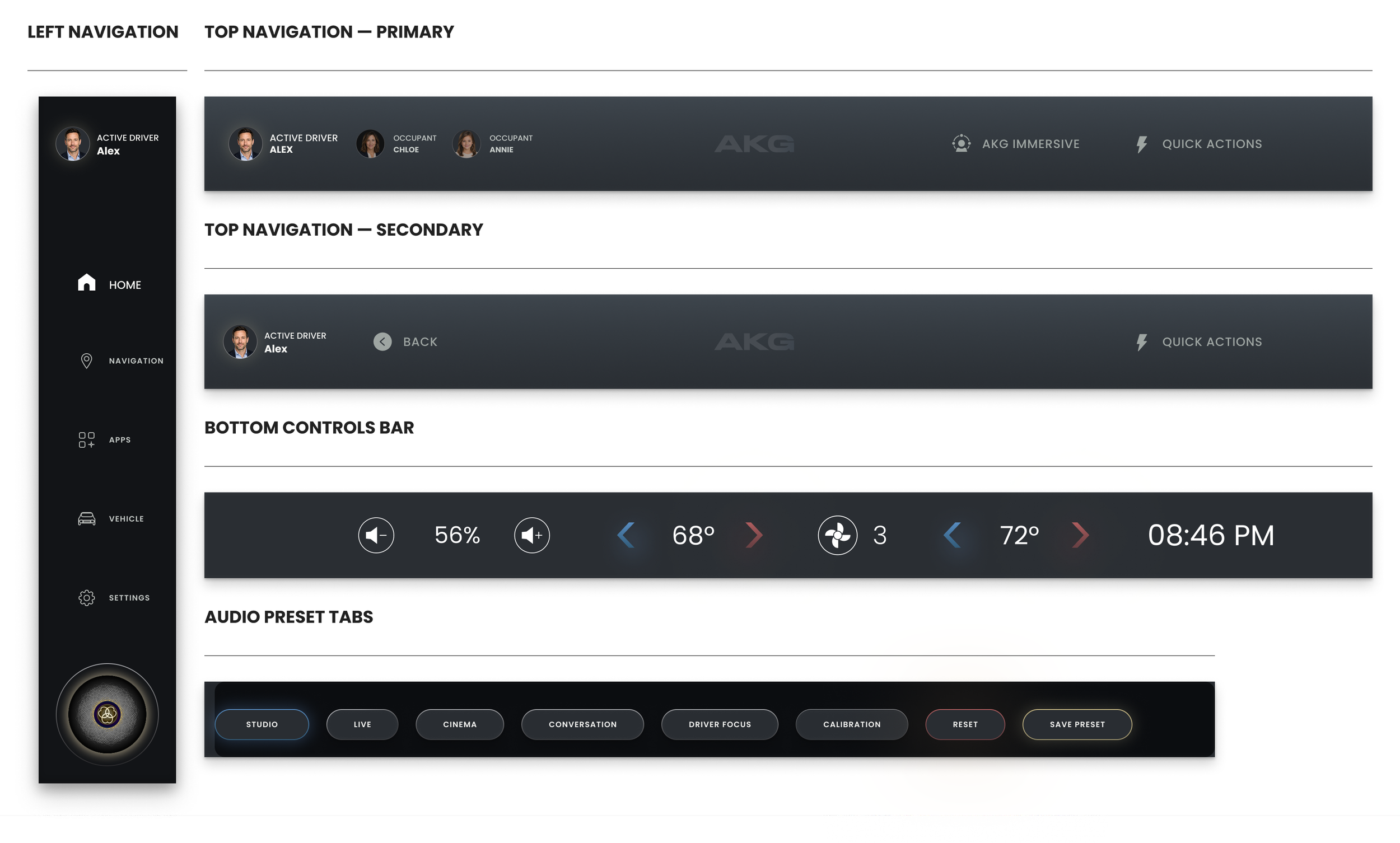
UI kit showing type, color, layering, navigation bars, tabs, buttons, and sound-ripple visual language.
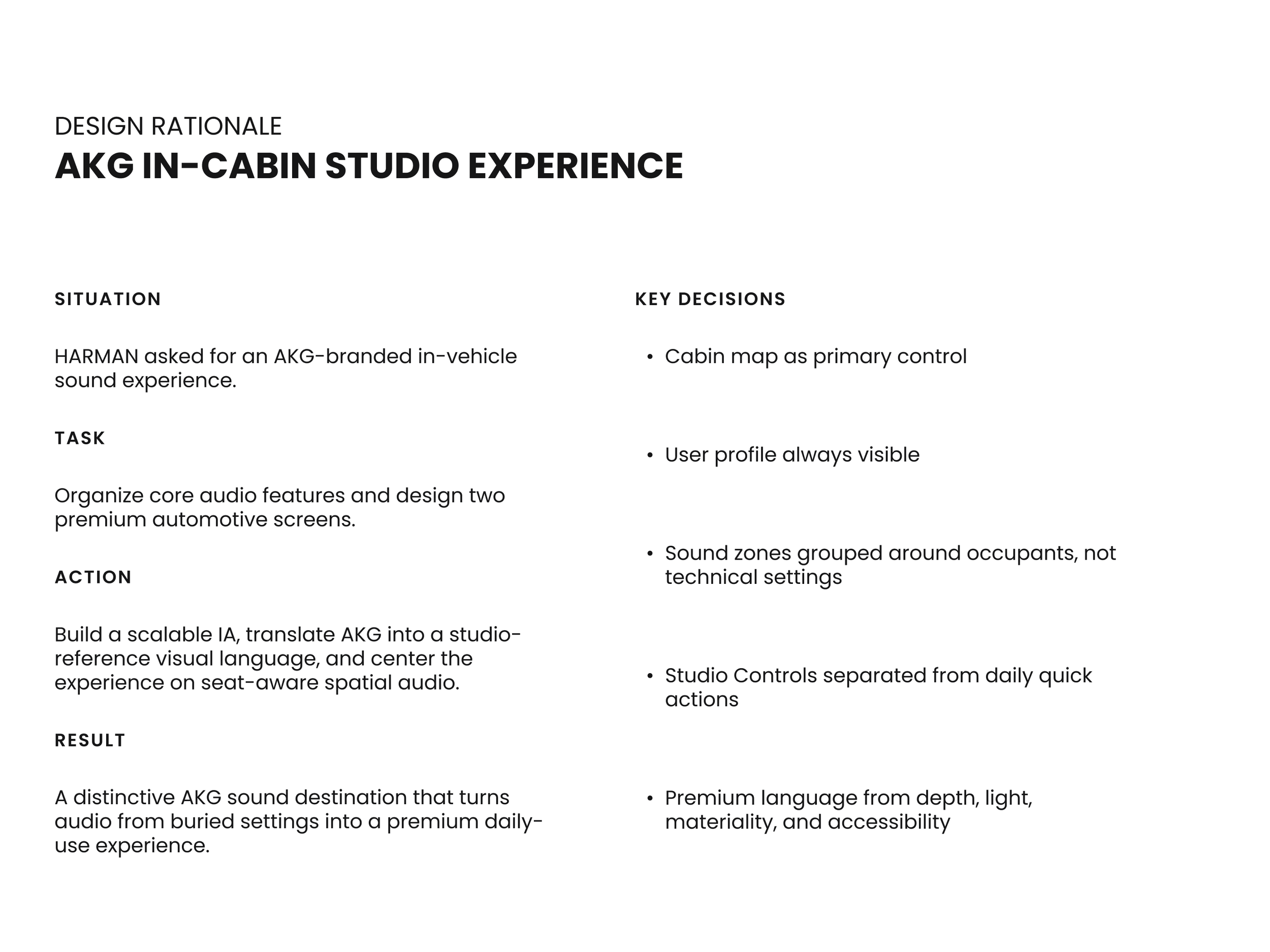
Design Rationale
The interface translates AKG from product brand to cabin experience.
This concept uses familiar in-vehicle patterns — media, maps, profiles, climate, and settings — as the foundation for a premium sound experience.
The key design decision was to make sound feel integrated, not appended. AKG becomes part of the cabin’s behavior, not just a logo sitting on top of another infotainment UI.